
13 Untapped Business Models to Monetize AI-Generated Images (Beyond Selling Prints)
I have seen the dashboard screenshots, and I need to be honest with you: the “easy money” era of dumping thousands of unedited AI images onto stock photography sites is over.
If you are reading this, you probably know how to generate stunning visuals with AI. But you might be struggling to actually monetize AI-generated images in a way that pays the rent, let alone builds wealth.
I wrote a guide on the 20 Best Platforms to Sell AI Artwork for those who want to sell prints, and that is a great place to start.
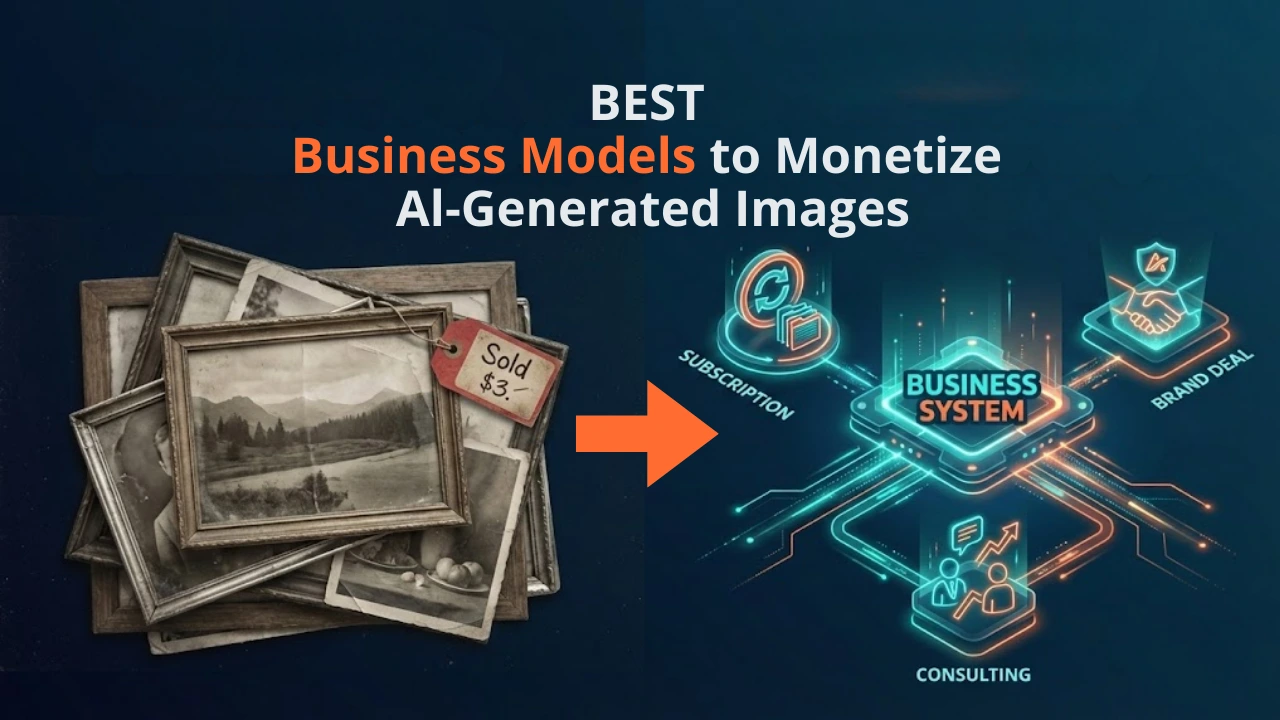
But if you want to build a real business? You need to stop selling the image and start selling the system.
The most profitable creators I track aren’t selling AI JPEGs for $3. They are building brands, solving expensive business problems, and creating recurring revenue engines. In this guide, we will show you exactly how to pivot from a “commodity seller” to a “business builder” with 13 specific models.
- Shift from Commodity to Systems: The most profitable AI creators have pivoted from selling low-margin individual images to building scalable brands and recurring revenue systems.
- Monetize Attention via AI Virtual Influencers: Building a consistent AI influencer persona allows for high-leverage income through brand deals and exclusive fan subscriptions on platforms like Fanvue and Patreon.
- High-Ticket B2B Service Arbitrage: creators can earn substantial B2B income by solving expensive business problems, such as professional AI photo enhancement for Airbnb listings or restaurant menu engineering.
- Profit from the Digital Asset Ecosystem: Selling “shovels”—such as high-utility prompt packs, game assets, and texture bundles—provides a reliable alternative income stream for technical creators.
- Build Private Label Physical Brands: Leveraging AI-generated visuals to create unique packaging for physical products, like coffee or hot sauce, allows you to capture premium margins and bypass the “AI art” stigma.
I. The Influencer Economy: Monetize Attention, Not AI Images
The highest-leverage way to monetize AI-generated images right now isn’t by selling the art at all. It is by using the art to create a persona that people want to follow.
Answer: You can monetize AI-generated images by building a digital persona or niche audience, allowing you to earn through subscriptions, brand deals, and affiliate marketing rather than individual image sales.
1. AI Character/Influencer Personas (The $12K/Month Model)
Answer: An AI influencer is a consistent digital character that builds a loyal following on social media, generating income through brand partnerships and exclusive content subscriptions.
Difficulty Rating: Advanced (Requires extreme consistency)
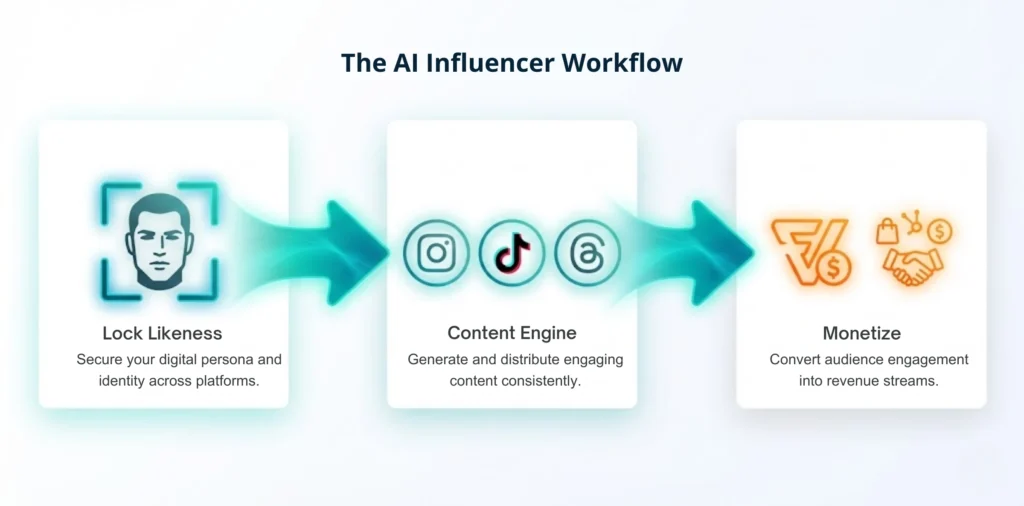
This is the holy grail of AI monetization right now. Instead of generating random pretty faces, you generate one consistent character—let’s call her Lina—and give her a life.
I recently analyzed a case study of a social media manager who manages two AI characters part-time. The result? $45,000 in annual profit. Another creator reports earning $12,000 monthly through Fanvue subscriptions and brand deals.
How It Works:
You treat your AI character like a real influencer. They post selfies on Instagram, thoughts on Threads, and dance videos on TikTok. You don’t make money from the posts; you make money from the relationship.
- Fanvue/Patreon: Fans pay $8–$15/month to see “exclusive” (often spicy or candid) life content.
- Brand Deals: Once you hit 50k followers, brands will pay for your character to hold their product.
The Secret Sauce is Consistency
The biggest failure point I see is face drift. If your character looks different in every photo, the illusion breaks, and you lose trust. You need to lock the likeness.
The Character Lock Sample Prompt Box
Copy this structure to keep your character consistent across different scenes. Use it on your favorite AI tool that supports character consistency:
Subject:[Name], a 25-year-old woman with [specific hair color/style] and [distinctive facial feature, e.g., freckles on nose], wearing [outfit], photorealistic 8k.Further technical settings (depends on your method and tools for generating virtual influencers):
- Seed: [Pick one number, e.g., 4829104, and NEVER change it]
- LoRA: [Insert your custom-trained LoRA name here at 0.8 strength]
- Negative Prompt: Cartoon, 3d render, changing facial features, morphing face.
Want to explore more on creating AI Influencers? Explore these 11 Best AI Tools to Create an AI Influencers
2. Niche Instagram Growth (The “Theme Page” Model)
Difficulty Rating: Beginner
If running and maintaining a virtual influencer personality sounds exhausting, try the “Theme Page” route. This is one of the most reliable AI image business models for beginners.
You pick a specific visual aesthetic, such as Synthwave, Cottagecore, Dark Fantasy, or Retro Futurism, and you flood the social media feed. Because AI allows you to generate unlimited content, you can post 5+ times a day. Human artists cannot compete with that volume.
The Monetization Play:
You aren’t selling the AI images. You are selling the traffic.
- Affiliate Links: Put a link in your bio for products like “Best Retro Decor” or “Synthwave Keyboards.”
- Shoutouts: Sell post slots to other creators for $20–$50 a pop.
3. TikTok Viral Content Creation
Difficulty Rating: Intermediate
TikTok has a massive appetite for satisfying or story-based AI content. I’ve seen channels blow up to 300k followers just by posting niche posts like “What Harry Potter characters would look like in 1980s Yakuza movies.”
The Money:
- TikTok Creator Fund: Pays pennies, but adds up at scale.
- Shopify Dropshipping: Use your AI-generated images to create slideshow videos on a topic like a “Cottagecore Aesthetic,” then link to a dropshipping store selling actual cottagecore lamps.
II. The AI Service Arbitrage Pivot: High-Ticket B2B Income
Answer: AI service arbitrage involves using AI tools to solve expensive visual problems for businesses, such as real estate photo enhancement or restaurant menu design, at a fraction of traditional costs.
Stop trying to sell art to broke people. Start selling solutions to businesses with budgets. This is how you monetize AI images without selling a single print.
4. Photo Enhancement for “Boring” Businesses
Difficulty Rating: Intermediate
Here is a fact: Bad photos cost Airbnb hosts thousands of dollars a year in lost bookings. Professional real estate photographers charge $200–$500 per shoot. Most hosts won’t pay that.
The Opportunity:
You offer a “Listing Upgrade Service.” They send you their dark, blurry phone photos. You use AI upscalers (like Magnific or Topaz) and generative fill to fix lighting, declutter tables, and make the room pop.
The Pricing:
You charge $50 for a batch of 10 photos. It takes you 15 minutes. That is $200/hour.
People Also Read: Fiverr Gig Ideas: Photo Restoration Services with AI
5. AI Art Consulting & Retainers
Difficulty Rating: Advanced
I firmly believe this is the future for smart creators. Businesses know they need to use AI, but they are terrified of it. They don’t know how to prompt, and they don’t know the legalities.
You don’t sell them images; you sell them the workflow.
Consider these potential high-profit ideas:
- Restaurant Menu Engineering: “I will generate mouth-watering images for your entire DoorDash menu.” OR
- Agency Retainers: “I will serve as your on-call AI asset generator for client storyboards.”
Service Pricing Data Table
Stop guessing what to charge. I’ve analyzed freelance rates and agency retainers to build this pricing framework. This isn’t theoretical; this is what the market is paying right now for AI art consulting and services. Notice the jump when you move from “fixing photos” to “fixing businesses.”
| Service Model | Pricing Structure | Potential Client | Why It Sells |
|---|---|---|---|
| Listing Polish | $50–$100 per batch (10 photos) | Airbnb Hosts, Realtors | Speed. They need it listed today. You deliver within a few hours. |
| Menu Engineering | $500–$1,000 Project Fee | Local Restaurants | Cost Savings. A real food photographer costs $3,000+. You are the budget-friendly upgrade. |
| Brand Asset Retainer | $1,500/month | Marketing Agencies | Consistency. They need 100 social posts a month. You build the LoRA and run the pipeline. |
| Consulting Audit | $2,000 One-Time Fee | E-commerce Brands | Workflow. You aren’t making art; you’re setting up their in-house AI automation system. |
People Also Read: How to Make Money with AI in 2026: The Ultimate & Proven Beginner’s Guide
6. The Personalization Station (Event Services)
Difficulty Rating: Intermediate (Requires “in-person” hustle)
Zoomers are making a killing with this offline. You set up a booth at a wedding, farmer’s market, or corporate event. You take a photo of a guest, and within 2 minutes, you AirDrop them a version of themselves as a Pixar character, a 1920s gangster, or a superhero.
It works because it is instant gratification. You don’t need inventory. You just need an iPad and a stable internet connection.
III. The Digital Asset Ecosystem: Sell the Shovels
In a gold rush, sell shovels. In the AI art rush, sell the assets that help other people create. This is a classic alternative AI image income stream.
Answer: Instead of selling finished art, you can monetize the AI boom by selling the essential tools—such as prompt libraries, textures, and templates—that other creators need to produce their own work.
7. Prompt Packs & Digital Asset Bundles
Difficulty Rating: Intermediate
I saw a creator on Reddit recently who has built a system of 1,050+ prompts. He isn’t selling the images; he is selling the recipes.
The Pivot:
Don’t just sell “100 Cool Prompts.” That is a commodity. Sell an Outcome-Based Bundle.
- Bad: “Midjourney Prompt Pack Vol 1.”
- Good: “The Real Estate Photography Generator: 100 Nano Banana Prompts for Perfect Interior Lighting.”
Sellers on platforms like Gumroad are moving $14k worth of these specific, high-utility bundles in just a few months.
8. Game Assets & Texture Packs
Difficulty Rating: Intermediate
Indie game developers are desperate for assets. They need 50 variations of a “stone wall” texture or 100 “fantasy potion” icons.
The Warning:
The gaming community is very sensitive about AI. You must be transparent. Label your assets clearly as “AI-generated” on marketplaces like Unity Store. If your assets are high quality and save them substantial hours of work, they will buy them.
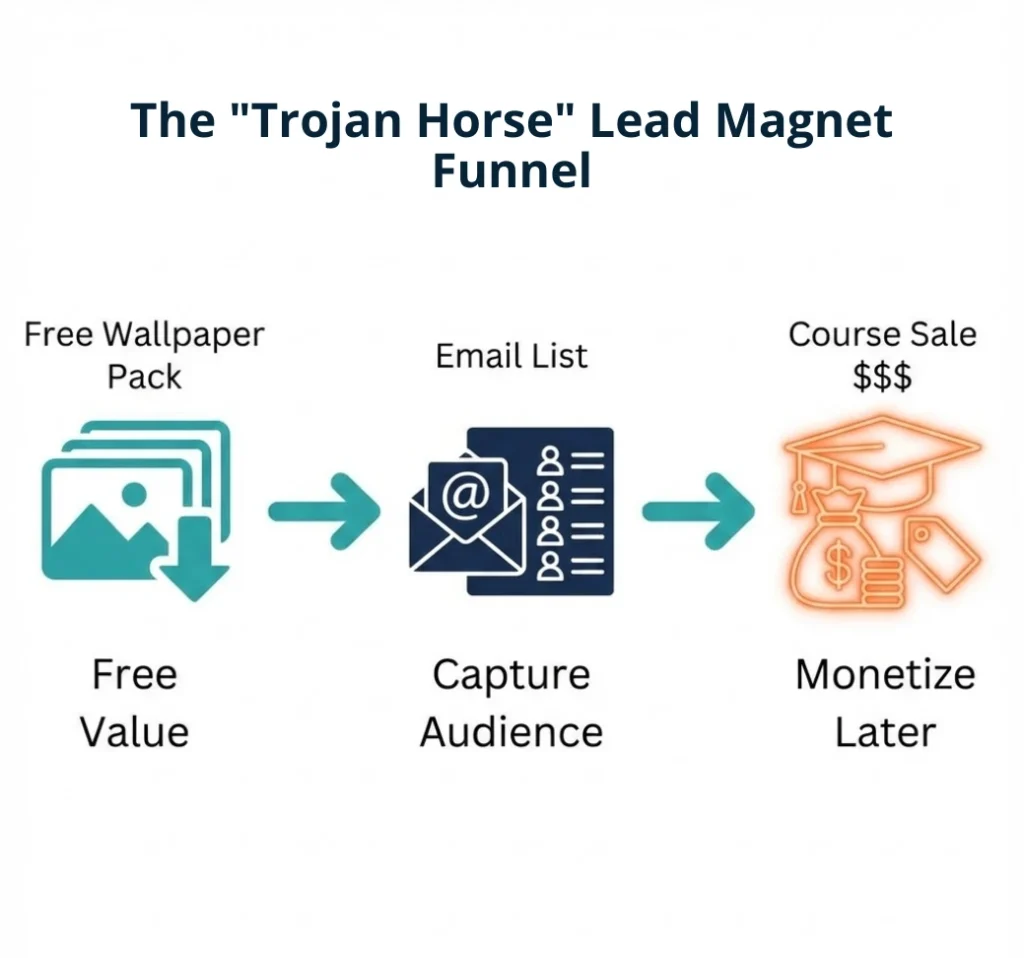
9. Lead Magnets (The Trojan Horse)
Difficulty Rating: Beginner
Here is a hard truth: nobody wakes up wanting to join your newsletter. But they do wake up wanting a sick 4K wallpaper for their new iPhone.
This is the Trojan Horse strategy. You create a pack of 20 high-res, aesthetic mobile wallpapers or professional mockups. You put them on Gumroad for $0+ (pay what you want).
The Payoff:
To download the pack, they have to give you their email.
Now you have a list of 1,000 people who love your visual style. Next month, when you launch your “AI Art Masterclass” or your premium “Prompt Library,” you aren’t shouting into the void. You are selling to fans.
- Pro Tip: This works exceptionally well for specific niches (such as “Cyberpunk Desktop Wallpapers”, “Tropical Fruits Mobile Wallpapers”, or “Boho Wallpaper Mockups for Etsy Sellers”).
MUST Read: The Blueprint for Easy AI Side Hustle 2026: Building Digital Products for Passive Income
IV: The Recurring Revenue Engines
Answer: Recurring revenue models focus on building membership communities and education systems where fans pay monthly for ongoing access to exclusive AI art, prompts, or workflow tutorials.
One-off sales are stressful. You wake up every month at $0. The goal of these AI image business models is to wake up on the 1st of the month with your rent already paid.
10. Subscription Content Clubs (Patreon/Skool)
Difficulty Rating: Advanced
I’ve seen the numbers: subscriptions priced under $10/month have the highest retention. Go above that, and people churn.
The Strategy:
Don’t just dump random images. Build a community.
- The “Behind the Curtain” Offer (Patreon): Post your polished SFW art on Instagram. But on Patreon, share the raw prompt file, the negative prompt, and the 50 “failed” generations that led to the masterpiece. Serious learners will pay to see your trash.
- The Creator Community (Skool): Charge $20/month for a community where you do weekly live Q&As and prompt battles.
- The “Uncensored” Gallery (Fanvue): If you are running a virtual AI influencer, this is where the spicy content lives. The conversion rate from Instagram follower to $10/month subscriber is often higher here than in any other model.
11. Course Creation & “Workflow” Sales
Difficulty Rating: Intermediate
There is a massive skill gap right now. People look at your images and say, “How did you get the hands to look perfect?”
Record your screen. Talk through your process. Sell that video as a course on Whop, Skool, or Udemy. You aren’t just an artist anymore; you are a teacher. Monetizing your knowledge often pays better than monetizing your output.
12. Style Transfer Apps (The “Wrapper” Business)
Difficulty Rating: Advanced (Technical)
You’ve seen the “Turn yourself into a Pixar character” trend on TikTok. Those aren’t magic; they are simple web apps wrapping an AI API.
Using vibe coding (no-code) tools like Bolt.new or Lovable.dev, you can build a simple interface (powered by an AI image generator API) where users upload a selfie.
The “Popcorn Pricing” Model:
Charge small amounts that feel invisible—$2.99 for 20 avatars. It’s the price of a snack.
It’s a volume game. If you can take a step further to promote this webapp on TikTok, you can make $10k in a month.
- Warning: Avoid trademarked keywords like “Disney” or “Ghibli” in your marketing to avoid legal headaches.
V. Extensions & Physical Brands
Answer: The highest level of AI monetization is using generated visuals to build a unique physical brand identity, allowing you to sell physical products at a premium due to eye-catching design and storytelling.
13. Branding for Private Label Products
Difficulty Rating: Advanced
Stop putting your art on generic Redbubble t-shirts. The margins are small, and nobody cares.
Instead, use your AI-generated images to build a brand.
The Play:
Launch a hot sauce brand called “Inferno AI.” Use Google’s Nano Banana to design the most insane, intricate, heavy-metal bottle labels the world has ever seen.
You aren’t selling the sticker; you are selling the hot sauce. The art is just the packaging that makes people stop scrolling and click “Buy.”
Why It Works: You escape the “AI images” stigma. Customers don’t care if the label was drawn by a human or a robot; they just care that it looks cool on their kitchen table.
Conclusion: Pick one and execute
We have covered 13 different ways to monetize AI-generated images. The biggest mistake you can make right now is trying to do all of them.
Here is my advice:
- If you are a creative introvert: Build an AI Influencer Persona. You get to run a fame-generating media empire and interact with thousands of fans, all while staying completely anonymous and never showing your face on camera.
- If you are a technical “system” thinker: Start selling Prompt Packs & Asset Bundles. You prefer organizing data, testing variables, and building efficient workflows over dealing with clients.
- If you are an extrovert who loves sales: Launch an AI Consulting Agency. Get out there, shake hands with local business owners, and pitch them high-ticket retainer packages to fix their visual marketing.
- If you are a patient teacher: Start a Skool Community. Monetize your knowledge by recording your screen and teaching others the “how-to,” creating a loyal following of students.
- If you just want “set it and forget it” income: Focus on Print-on-Demand or Stock Assets. It requires a heavy upfront grind to upload thousands of designs, but once they are live, the income is truly passive.
The market is flooded with people who know how to type a prompt on an AI. It is starving for people who know how to build a business. Be the latter.
Still want to try the marketplace route? Read our guide on the 20 Best Platforms to Sell AI Artwork.
Frequently Asked Questions (FAQs) about the Business Models to Monetize AI-Generated Images
Can I legally monetize AI-generated images?
Yes, but you need to understand what you are selling.
In the US, purely AI-generated images cannot be copyrighted. This means you do not own the intellectual property (IP), but neither does anyone else. You are free to sell them, license them, or use them commercially (provided your AI tool’s terms of service allow it).
Which platform pays the most for AI art?
If you want pennies, go to stock sites. If you want a salary, go to subscription or B2B models.
Direct marketplaces (like Adobe Stock or Redbubble) are volume games where you compete with millions of images for $0.33 royalties. The highest “paychecks” currently come from:
1. Fanvue/Patreon: Monthly recurring revenue from loyal fans (proven $10k+/mo potential).
2. Direct B2B Consulting: Charging businesses a retainer ($1,500/mo) to manage their image workflows. You control the pricing here, not an algorithm.
Do I need to disclose that my art is AI?
Yes. Non-negotiable.
In the high-ticket economy, trust is your only currency. If a client finds out you passed off AI as hand-drawn work, they won’t just fire you; they will wreck your reputation.
For Clients: They must know because they cannot trademark raw AI assets. Hiding this exposes them to legal risk.
For Fans: Audiences value “Human Curation” and “AI Mastery.” They don’t mind AI if you are honest; they hate being tricked. Label it, own the workflow, and sell the result.