
The Blueprint for Easy AI Side Hustle 2026: Building Digital Products for Passive Income
Let’s be honest for a second. The AI Gold Rush of 2023 is over. You can no longer slap 50 generic designs on a T-shirt, upload them to Redbubble, and expect to retire early. The “easy money” phase has ended. But here is the good news: The smart money phase has just begun.
If you are looking for a sustainable and easy AI side hustle in 2026, you need to stop thinking like a freelancer or digital products creator and start thinking like an asset manager. The goal isn’t to trade your time for money; it is to build digital assets that you create once with AI, and they pay you royalties forever.
In this blueprint, we will look at the data and rules. We analyzed hundreds of successful shops and verified income reports (especially on Etsy and Amazon KDP) to bring you the three easy business models that are actually working right now.
The TL;DR Profit Matrix (2026)
Here is the reality of the digital products market right now.
| Business Model | Income Potential (Range) | Difficulty | The “Secret Sauce” |
| Niche Fiction (Amazon KDP) | Varies widely (royalties, KU reads) | High | Write 30k–50k novellas with a consistent “Story Bible,” then edit like a human. |
| Etsy Digital Downloads (Coloring Pages) | Varies widely (volume, bundle value, niche) | Medium | Sell the finished printable pack (PDF), with a tight theme and print-ready quality. |
| Agentic Workflows (JSON prompt packs) | $19–$97 / pack (common pricing test range) | Medium | Sell a reusable and flexible system (“workflow kit”), not a single prompt. |
The Shift: From Gigs to Digital Products
Before we look into the how, we need to define what we are building. Most people fail because they treat AI like a magic button. They span the internet with low-quality noise.
We focus on high-quality, structured digital products created with AI (like a specialized workbook or a specific art collection) that generate recurring revenue without daily maintenance.
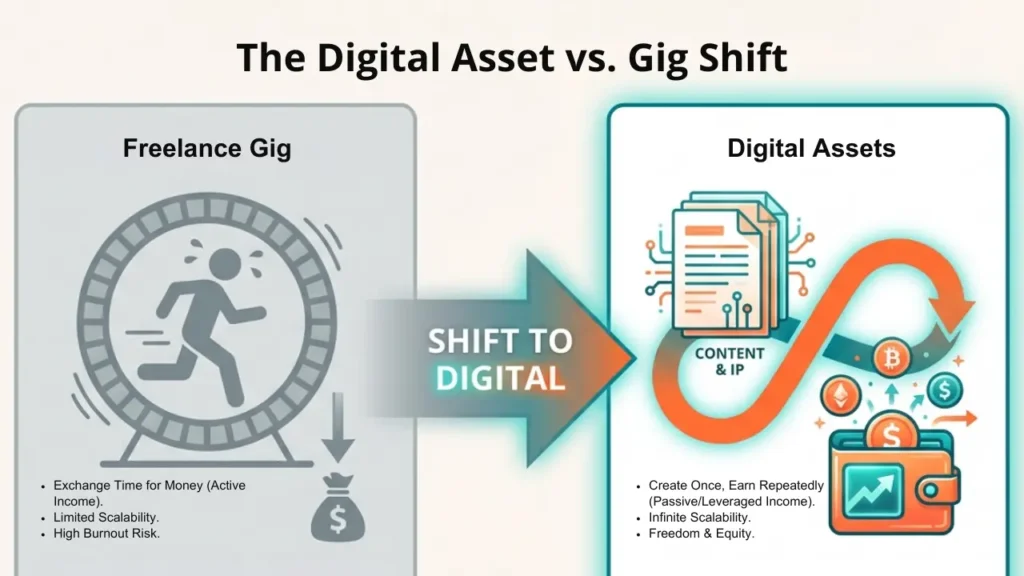
The difference between a Gig and a Digital Asset (product) is simple:
- Gig: You generate an image for a client on a freelance marketplace like Fiverr. You get paid once.
- Digital Asset: You use that image to create a digital product such as Coloring Pages on Etsy (or other such marketplaces). You get paid 500+ times.
Below are the three proven digital product classes you can build today.
I. Digital Asset Class #1: High-Value AI Publishing (Amazon KDP)
Forget genericlow-content notebooks. The market is flooded with blank journals, and Amazon is actively suppressing them. The real money in 2026 is in specific niches like Fiction (for niche novellas) and Specialized Workbooks.
The Strategy: The Algorithm Pivot
Amazon is investing in systems like COSMO, described as a large-scale system that uses “common sense knowledge” to improve shopping relevance.
For you, the takeaway is simple: discovery doesn’t live on keywords alone anymore—reader behavior is the judge (clicks, conversion, page reads, reviews, and whether people actually finish and recommend).
Low-quality AI books don’t need a secret slop detector to fail; they fail because readers bounce, and the platform learns from that outcome.
To understand more about Amazon’s COSMO, read its publication from Amazon Science, or get the simplified report from VML.
What Works Now:
- Sub-Niche Fiction: Such as Romance or Sci-Fi novellas (30k-50k words).
- Tech Stack: You cannot write a novel in one shot with AI. It will generate AI slop. The verified workflow uses an AI like Gemini because its massive context window allows it to remember your “Story Bible” (features like characters, locations, tone).
The 90-Day Reset Hack
Here is a golden nugget from successful authors: Rankings decay faster now than they used to. To keep your passive income alive, you need the 90-Day Reset:
- Every 90 days, update your book’s subtitle and description.
- Run ads to promote.
- Drive traffic from external sources like social media (TikTok, Pinterest, Facebook, Instagram, etc.)
This signals to the algorithm that the buyers have developed a liking for your book again.
AI Prompt Sample: The World Builder
Use this prompt in your favorite AI, like Gemini, as an inspiration to ensure your AI co-author never forgets a character’s eye color.
SYSTEM_INSTRUCTION:
{
 "project": "Neon-Noir Sci-Fi Novella",
 "consistency_rules": {
  "protagonist": "Leila, cybernetic arm (left), scar on right cheek, cynical tone",
  "setting": "Neo-Tokyo, perpetual rain, neon purple lighting",
  "forbidden_tropes": ["tapestry", "shiver", "unbeknownst"]
 },
 "task": "Write Chapter 3. Maintain 'Gritty Noir' tone. Output format: Markdown."
}
Want to explore more? Read this related article on how to use AI on Amazon KDP without breaking the rules.
II. AI Side Hustle #2: The Coloring Book Asset (Etsy)
If you like visual digital products but don’t want to play the “poster wall art” game, this lane is evergreen: printable coloring pages and coloring book AI bundles.
And yes—this niche is real. Etsy search is already stacked with “coloring book prompts” and “coloring page prompt builder” style listings, which tells you there’s active demand and buyer intent around AI-assisted creation workflows in this space.
But policy matters more than what “slips through”: Etsy allows seller-prompted AI creations (as long as you disclose AI use in the listing description), and Etsy explicitly prohibits selling AI prompt bundles as a standalone product.
The Strategy: Sell finished pages (not standalone prompts)
The money isn’t in selling a spreadsheet of AI prompts. The money is in selling the finished asset: for example, a themed, print-ready coloring pack (PDF), plus high-value extras such as covers, print settings, guides, bonus pages, etc.
If you include prompts, treat them as supporting documentation (the high-value extras) that help buyers customize the style.
What Works Now: Evergreen themes + micro-angles
Instead of random “1000 pages mega Midjourney prompt bundles,” build tight collections that feel intentional and giftable. For example:
- Plants: “Houseplant Coloring Pages for Plant Lovers,” “Succulent & Cactus Line Art,” “Botanical Herb Garden.”
- Kids: “Cute Animals,” “Dinosaurs,” “Princess & Dragons,” “Vehicles,” “Alphabet + Coloring.”
- Adults: “Mindful Mandalas,” “Cozy Girl Moments,” “Affirmations + Coloring,” “Minimalist line art.”
The goal is simple: a buyer should instantly know who it’s for and what mood it creates.
The Tech
Use whatever AI tool gets you clean, consistent line work, and commercial-safe output:
- Any strong image model for concept generation (such as Midjourney, Nano Banana, ChatGPT, etc.).
- A cleanup + consistency step (vector/line cleanup, thresholding, stroke control) so pages print crisply.
The tool is interchangeable; the production standard is not.
The “Human Premium” Hack (Trust + Conversion)
Etsy’s own guidance on digital downloads emphasizes clarity in presentation so buyers understand what they’re getting and don’t feel misled.
So add one simple proof-of-work asset.
For example, a 5–15 second short listing video showing you adjusting line thickness, removing artifacts, or assembling the final PDF bundle.
NB: Buyers don’t need perfection; they need confidence.
Compliance note (don’t lose your shop)
If AI was used to create the item, Etsy says you must disclose that in your listing description.
And even if you see prompt listings live, Etsy’s Creativity Standards explicitly point to plain “AI prompt bundles” as not qualifying under “Designed by a seller,” so avoid prompts-only products.
Safest positioning Example: “Printable Coloring Pages (PDF)” as the main deliverable, with “Bonus: prompt recipes + settings” inside the download.
AI Prompt Sample: Generating Coloring Page Factory (safe version)
Use this to generate consistent pages, then sell the finished printable pack (and include your prompts as high-value extras, not the main product).
Act as a Coloring Book Art Director.
Theme: [replace this with niche-specific theme like, “Houseplants for Plant Lovers”]
Audience: [replace this with your product’s target audience, like Kids 6–10 / Adults / Beginner colorists]
Style rules: clean black line art, no shading, bold outlines, white background, printable, consistent proportions.
Output: generate [30] unique page concepts + [30] finalized prompts (one per page) + a 1-page cover concept.
Constraints: avoid copyrighted characters/brands; keep elements simple enough to color; keep each page centered with a clean margin for printing.
Need more niche ideas? Check out this article to discover Etsy’s best-selling cat printable wall art designs.
III. Digital Asset Class #3: Selling Agentic Workflows
Selling single AI prompts for $1.99 is a waste of time. The market has evolved. People don’t want another prompt; they want a Solution.
The Strategy: Sell the Recipe, Not the Ingredient
Successful creators are now selling Agentic Workflows, such as detailed, optimized, and adaptable bundled JSON scripts that solve a complex problem
- Example: Instead of “Real Estate Prompt,” sell “The Ultimate Real Estate SEO Agent.” This pack would include prompts for listing descriptions, email follow-ups, and social media posts, all linked together.
Why This Pays More: Because it saves the buyer time, a single prompt saves 10 seconds. A workflow saves 10 hours. That is why these packs sell for $19 – $97 instead of $2.
AI Prompts Sample: The JSON Architect
Use this prompt to turn your simple ideas into a professional, high-value workflow product.
Act as a Senior Prompt Engineer. I have a process for [Topic: Writing SEO Blog Posts].
Convert this process into a structured JSON prompt workflow that I can sell.
Include variables for: "Target Keyword", "Tone", and "Audience".
Structure it so the output of Step 1 feeds into Step 2.
Also read our article on the best marketplaces to sell your AI Prompts
The Live AI Tech Stack: What the Pros Use
You can’t build a house with plastic tools. To execute these AI side hustles professionally, you need a real AI tool stack. Consider this example of such AI tool stacks:
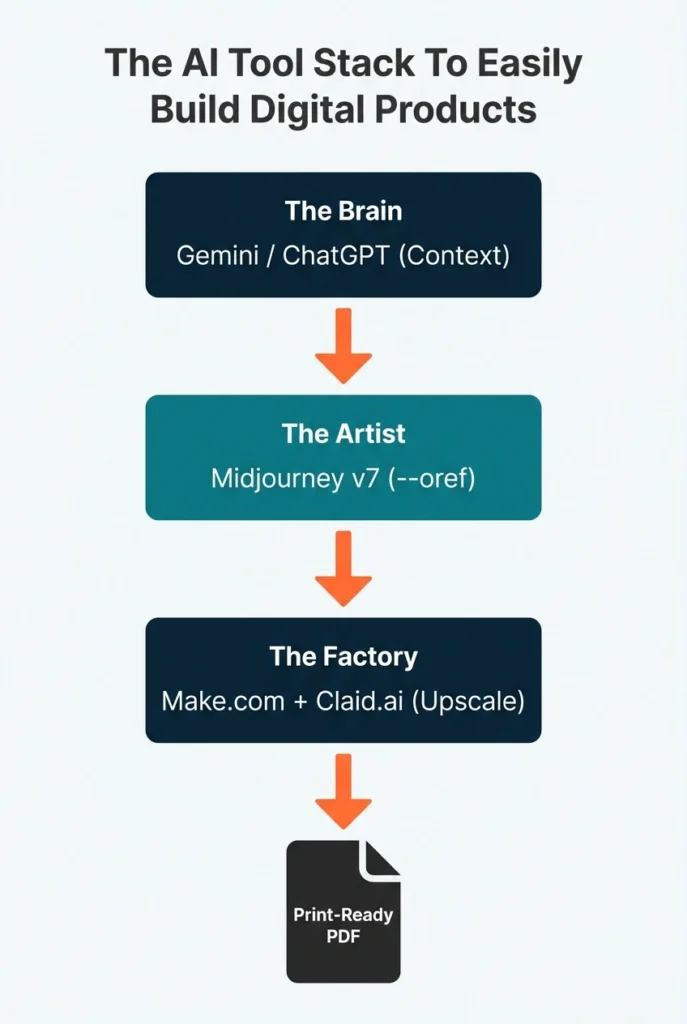
- The Brain (Orchestration): Gemini / ChatGPT (latest models).
- Why: Use a model with a large context window so it can hold specifics about your book, brand rules, and multi-step workflows without losing consistency.
- The Artist (Visuals): Midjourney, Nano Banana, ChatGPT, etc. (pick one you can control).
- Why: What matters is repeatable image style control and clean outputs you can refine. For example, Midjourney v7 features the –oref parameter, which provides a reliable way to get character consistency.
- The Factory (Automation): Make.com + Claid.ai
- What is it: This is the industrial assembly line for your images.
- Why: You can’t manually crop 500 images. Pros use Claid.ai connected to Make.com. It uses Smart Frame technology to detect the subject (e.g., a sticker or character), crop perfectly around it, and automagically upscale it to 300 DPI for print—all without you opening Photoshop.
- The Workflow: Midjourney generates images, Make.com sends them to Claid.ai (for crop/upscale).
Check out these Make.com Claid.ai integrations.
MUST READ: Make Money with AI in 2026: Ultimate Beginner Guide
The Danger Zone: How to Avoid Getting Banned
The digital products marketplaces like Amazon or Etsy aren’t banning AI; they are banning spam. Avoid these traps to keep your income safe.
- The Spam Velocity Trap (Etsy):
- The Myth: “Upload 50 listings a day to dominate.”
- The Reality: New accounts with high-velocity uploads (e.g., >10-20/day) of similar AI content are flagged as “low-effort automated shops.”
- The Fix: Curate, don’t dump. Upload 3-5 high-quality listings per day and ensure every single one has the Designed by a Seller category selected with AI disclosure.
- The Hollow Engagement Ban (Amazon KDP):
- The Trap: Publishing content that disappoints readers (thin value, misleading descriptions, repetitive pages).
- The Reality: KDP’s Content Guidelines say they can remove content that creates a poor customer experience, including content that misleads customers or doesn’t accurately represent what’s inside the book.
- The Fix: Make the first pages deliver real value, match your description to the actual content, and edit AI-generated text until it reads like a human wrote it.
- The Metadata Trademark Poison (KDP & Etsy):
- The Trap: Putting brand names (e.g., “Disney style,” “Harry Potter vibes”) in your backend search keywords.
- The Reality: Bots scan backend metadata. Even if your cover is safe, a single “Marvel” keyword in your settings can get you punished for IP infringement.
- The Fix: Use descriptive aesthetics only (e.g., “dark academia,” “magical school,” “heroic fantasy”).
- The Disclosure Lie (Etsy):
- The Trap: Selecting “Handmade” for AI art to avoid stigma associated with AI.
- The Reality: Etsy’s image detection can spot AI artifacts. Mislabeling your item is a violation of the creativity standards policy.
- The Fix: Always select “Designed by a Seller” and disclose that it was created with AI tools. It protects your account.
- The Public Domain Minefield:
- The Trap: Using newly public domain characters (like early Mickey Mouse) in AI art.
- The Reality: While legal, platform bots are aggressive. They often fail to distinguish between the Public Domain version and the Trademarked modern version.
- The Fix: Avoid major IP altogether. Build your own brands.
Conclusion: Pick One and Master It
The biggest mistake beginners make with an AI side hustle or online businesses is trying to do everything. They publish a book on Monday, a T-shirt on Tuesday, and a ChatGPT prompt pack on Wednesday.
Don’t do that.
Pick one digital asset class from this blueprint and commit to it for 90 days. Take the strategies in this blueprint and the sample AI prompts as inspiration to build digital assets that generate sustainable passive income.
Frequently Asked Questions (FAQs)
What are the best AI-based side hustles for beginners in 2026?
The best beginner-friendly AI side hustles are the ones where you build a repeatable digital asset (products created once, sold many times) instead of selling hours.
Good “first models” from this blueprint are Etsy digital downloads (printable packs like coloring pages) and structured workflow kits, because you can start small, validate demand fast, and improve the asset over time without needing a big audience.
Can you sell AI-generated digital products on Etsy?
Yes.
Etsy allows “seller-prompted AI creations,” meaning you can use AI tools as part of your creative process and still sell the finished result.
However, Etsy expects transparency: sellers should disclose AI use in the listing description when AI was used to create the item.
Can you sell AI prompt packs on Etsy?
Not as a standalone product.
Etsy explicitly says it prohibits the sale of AI prompt bundles on its platform, because prompts are considered part of the creative process and should not be sold separately from the final artwork.
The compliant approach is: sell the finished asset and treat prompts as supporting material inside the download—not the main product being sold.
How do you avoid getting banned on Etsy or Amazon KDP when using AI?
On Etsy, disclose AI use in your listing description and make sure your item qualifies as “designed by a seller,” avoiding prompts-only products.
On Amazon KDP, follow the Content Guidelines. Your description must match what’s inside the book, and your content must be genuinely useful/readable.